Sunday, June 12, 2016

Allied POWs in Switzerland in WW2

While I was supposed to be working on my English presentation, I couldn't help noticing the book on the side of the table.  It was called "Shot from the Sky: American POWs in Switzerland. I ended up reading section of the book, which included testimonies from American veterans. Whilst one claims that conditions for the soldiers were very bad, the other states that his plane was shot down. In addition, the book calls this one of Switzerland's dark secrets, at a time when, ironically, the Geneva conventions didn't apply to neutral countries.

Whilst I didn't continue reading this particular book, I decided to research the subject deeper. I found out that there were three internment camps for POWs. It is believed by many people, or at least the history teachers and swiss people with whom I talked about this, that the soldiers would reside in hotels or apartments. In reality, that was only for those who demonstrated very good behaviour. Those who were deemed capable of escaping were placed in these camps. Funny enough, the "neutral" country did not host a single soldier of Germany or any other country allied to the Nazis, but thousands of allied soldiers. As a matter of fact, Nazi planes were allowed to land and refuel.

The conditions in the detention facilities were very poor, with the accommodates being cottages in which many people would altogether sleep on hay. Guards would sometimes mistreat an d often beat up the allied soldiers. Finding out all of this couldn't stop e thinking: How did I not know all this until now?

Tuesday, May 24, 2016


The Lightbringer Series


This is a four book series written by Brent Weeks. I read the first three books this term and will read the fourth book when it comes out in October. Having read and enjoyed Brent Weeks' previous series, the Night Angel series, I looked with much anticipation to the Lightbringer series and was not let down. The books were extremely good, speaking of a fictional world where there are the normal people, and the light-users (aka drafters in the book) who are able to split the white light and draft a color or colors into a solid form. The books take place in the Chromera, the main city of this world, and follow Kip, a bastard only claimed by his father in his teenage years, his father who is one of the most powerful men in the world. I greatly enjoyed the books, and would definitely recommend the series.

Friday, May 6, 2016

Me before you by Jojo Moyes

This is one of my private reading books I have read over the last few weeks, I am almost finished with it and I wish there would be a sequel since it is such a fascinating and beautiful story. The book is about a paralyzed young man who falls into a deep depression because of this severe, life changing accident. His life is going downhill until a very chaotic but happy and energetic young woman comes along to work as a "carer", helping him eat, changing his bed sheets etc. The book takes many positive and negative turns which keeps the reader very interested. I absolutely loved the book and I can mostly recommend it to the girls since its more of a love story. Still, based on a true story, it is very inspirational and insightful.

Leonardo Da Vinci by Giorgio Vasari

The little black book by Giorgio Vasari is a Brief Biography of three Italian artists: Da Vinci, Filipipo and Botticelli. The book had some very inspiring phrases in it, describing different paintings about these world famous artists which was my favorite part about it. One of the many beautiful phrases describing the Mona Lisa was 'In this painting of Leonardo's there was a smile so pleasing that it seemed divine rather than human.' The book is amazing for anybody which is interested in art history, which I definitely am therefore I was very pleased when I finished it. A great read, I can only continue recommending it! 


I have almost finished the second little black book from Johann Wolfgang von Goethe "Sketchy, Doubtful, Incomplete things."  The book has a selection of the most insightful maxims and reflections from one of Germany's greatest ever thinkers like Goethe.  The book is slightly harder to read, and certainly takes longer to read than the last one. I would not recommend this one unless very interested in these writers or thinkers. Still, it is very educational and insightful. 

The Scarlett Letter

I started reading "The Scarlett Letter" a few weeks ago, but I didn't reach that far. The main character, Hester, is condemned to public shaming for "adultery" and she goes on stage holding her kid. She has cheated on her husband, because he had left her. Another punishment of hers is to have the letter A embroidered on every gown she wears, in order to embarrass her even more and draw more attention to her "crime". Her husband had left her to go to America, but she recognises him in the crowd, but he tells her not to reveal who he is. The two meet later and he makes it clear that he wants revenge on her and her lover.

That's as far as I have reached in the book, but I am really enjoying it. It is easy to read and even though, I have only read 5 chapters, the action has begun from the beginning. The book really keeps me wanting to read and know what's going to happen next. The emotions are conveyed really well and the old times are described throughly, which makes it easier for the reader to imagine being there and to guess what life was like at those times.

The curious incident of the dog in the nighttime

I am still currently reading the curious incident of the dog in the nighttime, and i have to say that I really enjoy how the story flows throughout the book, and also how no matter the situation, and no matter the consequence the boy still does not know how to lie or how to try to get out of a situation. The boy still acts like he did during the first incident when he discovered the dog dead on the road with a pitchfork in it, and he still replies the same way when anyone asks him any questions. All in all I am really enjoying the book and I hope all of you get a chance to read this very mysterious and humorous book as well.
Image result for the curious incident of the dog in the nighttime

Thursday, May 5, 2016

Emily Brönte: What influenced her poems?

Over the past months, I have been reading various poems by Emily Brönte. my favourite one so far was probably "The night is darkening round me", which I analysed here on blogger. This is why I decided to look into the life of Emily to truly understand what is behind her poems.

Brönte was born during the First World War in a small English village called Haworth, in West Yorkshire. Her mother tragically died of cancer when Brönte was two years old, leaving her five daughters and one son. With most children being sent Cowan Bridge School, two of Brönte's sisters also became writers. Her two other sisters finished school early because they were very sick, later passing away.

This very likely affected her writing. In her poem, there are often characters with no parents, no other or they were abandoned. She was vey interested in nature, which is also reflected in her writing: birds, plants and other forms of nature often appear in many of her poems.

Like many writers at her time, Brönte wrote poems about being in jail, as well as dying. Along with her sisters, she wrote small books of poems and even wrote a book called "Withering Heights". In poems, she often described am imaginary world she called "Gondal", which she defined as a world of"royalty, intrigue, abandonment, war, murder and assassination.

During victorian times, people tended to die at a much younger age. Diseases were spread at a much faster rate and people would mostly live inn unhygienic conditions. Brönte herself believed in Christianity. Like today, many Christians would embrace death. The only difference is that Christianity would be much more important to the daily life of an Englishman than today. In conclusion, Emily Brönte's poems were mainly influenced by death. her siblings, her personal interests and Victorian culture.

Wednesday, May 4, 2016

Atonement, Ian McEwan

This time, I chose to read a book written by an author that I was familiar with. The name of the book is Atonement, by Ian McEwan.

Firstly, we start off with the Tallis family, they are an upper class family. The main character of the story is Briony Tallis, who is the youngest out of the three daughters. They are expecting a visit from their cousins, Jackson, Pierrot and Lola who are staying with them because of their parent's divorce.
The story really starts when Briony sees what her sister Cecelia, and her childhood friend, Robby Turner, are doing together.
Briony processes these events as something very usual because she is an imaginative 13-year old that does not understand these things yet. She then decides that Robbie is a lunatic which results in the twins running away. When the family goes out to look for them, Briony finds here sister Lola that has just been sexually abused and is convinced that is guilty. She tells the police and he is put in prison but his mother and Cecilia are on his side and protest for him not to go to prison.
The next part of the story is 5 years ahead of time, when Robbie is released from prison and has to join the British Expeditionary Force fighting in France against the Nazis. He gets wounded and is only kept going because of Cecilia's letters.
Briony then realises that it wasn't Robbie that sexually abused her sister Lola and feels very guilty about it so she decides not to go and study in Cambridge but to become a training nurse. Her other sister Lola and Paul get married and Briony suspects that it was him that raped Lola, however she does nothing to stop the marriage.
One day, she decides to go and visit her sister, Cecilia and sees Robbie in the apartment and she was surprised that he is still alive. She tried to ask for forgiveness but they both refuse. Robbie and Cecilia give Briony a list of things that she can do to help clear Robbie's name and she agreed to do them.

At the end, we figure out that Briony is actually the author of the book and she was able to write the parts of the war because of the letters and a pen-pal correspondence with a corporal that was Robbie's friend. She was 77 years old at this point in the book. The final twist is that she mad sup the part about her going to see Robbie and Cecilia in London and that they both died in the war. She says that she just wanted to let their love last into the final pages of the book and that would be her fins atonement to them.

Briony is the main character and the story is told through her eyes. She is the one that makes all the plot twists in the book. The story starts off when she is only 13 years old and when we first meet her, we perceive her as a very imaginative and creative young girl as she has already managed to write her first play.
She first starts to lose her innocence when she misunderstands the situation between her older sister and Robbie. She obviously did not seem to understand adult behaviour and took it for something bad and vile.

I really enjoyed this book because I had no idea what was going to happen at the end of the book, it was a complete turn. The war and her not seeing Robbie and Cecilia again was something that we would not have expected from when we read the first chapter.
I also really liked how we found out at the end that Briony herself was the author of the book because then we reflect back on everything that happened in the book and it all makes sense. Throughout the book, we would have never guessed that Briony was the author because we had no clues.

Ian McEwan more or less wrote Atonement in a similar style to Black Dogs. The sentences and language that he uses are similar in both books. I really like his book and stories because they always have an amazing plot twist at the end. I would like to read more of his books to see what other kind of stories he writes.

Friday, April 29, 2016

"An abundance of Katherines" by John Green

I have continued to read my book and its becoming more and more interesting. Once Colin and Hassan arrive at Gutshot they meet a girl called Lindsey who coincidentally is dating a guy named Colin. Her  great grand father started a string factory there a long time ago and it is the hotspot for all people looking for a job. The three of them become friends very quickly and Lindsey's mom gives Hassan and Colin a job which includes going around the town and asking people about Gutshot and a factory there. They interview local people who live in the area as well as factory workers. Whats quite interesting is that Lindsey seems to act very differently in front of each group of people which suggests that she changes the way she is to make other people happy; making her a people pleaser. Collin thinks that she isn't very intelligent and is quite superficial. She reads Celebrity Living and doesn't seem to have much depth. Although in fact in my opinion I think that she just plays dumb as a coping mechanism or a mask for her insecurities. She seems to wear a lot of different masks infant of certain types of people which is very interesting.

I think the characters in the book are becoming more and more complex which is thickening the plot. I really am enjoying this book and can't wait to find where the characters adventures will lead them. 


Thursday, April 28, 2016

"An abundance of Katherines" by John Green

I have just started to read this book and though it is moving at a slightly slower pace; I'm finding it really interesting. The book is about a teenage boy named Collin Singleton. He is extremely intelligent (he could read at the age of two). He loves everything to do with reading and language as well as anagramming. He is very self conscious of the fact that manu people think that he is a washed up child prodigy therefore he spends most of his hours studying and reading. Collin has not been successful though in finding a long term girlfriend. He has dated 19 girls all with the names of Katherine and he has been dumped by every single one of them. He had just been recently dumped and decided to go on a road trip with his best friend, Hassan. Hassan is almost the polar opposite of Colin he spends most of his time watching tv and hasn't even applied to college yet. 
I am at the part right now when they are on the road and have just seen a town called Gutshot that claims to have the grave of the Archduke Franz Ferdinand. So they stopped there and thats the part that I am at. So far I am really enjoying this book, its a nice change from the quick paced books that I usually read. I can't wait to find out more the road trip!


"Angel Dares" by Joss Stirling

I have just finished reading this amazing book! It was the second one in the series and I think that the third is coming out in October. This book was brilliant! It had the perfect amount of action, romance and supernatural in it. I loved the way that the author really brought the characters alive as well as the fact that she used their gifts to show their weaknesses and strengths within their personality.  One of the main themes in this book was accepting someone for who they are; the good and the bad. This was very interesting as I got to see the evolution of Marcus, who at first didn't accept Angels gift but then eventually began to trust her more and he found it within himself to fully accept her and himself. I think that the main reason he wanted nothing to do with her or her gift was because he couldn't accept himself or the fact that he may be different. His gift was only triggered once he fully accepted himself for who he was. Different doesn't necessarily mean bad. I think that the difference between their personalities also complemented each other very well. Angel is impulsive, outgoing and isn't very organised on the other hand Marcus doesn't like change, he enjoys routine and is very guarded around other people. Angel managed to bring some spontaneity in to Marcus's life and Marcus brought some order to Angels chaos. Overall I really enjoyed this book and can't wait for the next one to come out!!!


Sunday, April 17, 2016

I am the Only Being Whose Doom: Commentary

I am the only being whose doom
No tongue would ask, no eye would mourn;
I never caused a thought of gloom,
A smile of joy, since I was born.

In secret pleasure, secret tears,
This changeful life has slipped away,
As friendless after eighteen years,
As lone as on my natal day.

There have been times I cannot hide,
There have been times when this was drear,
When my sad soul forgot its pride
And longed for one to love me here.

But those were in the early glow
Of feelings since subdued by care;
And they have died so long ago,
I hardly now believe they were.

First melted off the hope of youth,
Then fancy’s rainbow fast withdrew;
And then experience told me truth
In mortal bosoms never grew.

’Twas grief enough to think mankind
All hollow, servile, insincere;
But worse to trust to my own mind
And find the same corruption there

The first line of the poem automatically sets the mood of the entire poem. Although this is the case in many poems, the lone, which also happens to be the title of the poems, very strongly suggests that the person is isolated and has a rather skeptical frame of mind. We know this because it is later written "I never caused a though of gloom", meaning that her feelings no longer seem to be there, a hint of consequences of isolation. 

Later, the author writes: "A smile of joy since I was born". This changes the so far depressing mood. Therefore, this can be interpreted as if the author is trying to fire her mood up. 

The author uses a number of rhymes in the poem. This seems to slow down the rhythm. There is a particular emphasis on the first person, with pronouns such as "My" and "I" being constantly repeated.  In conclusion, the author uses strong language to explain her feelings. With that said, it is undeniable that the general mood of the poem is rather distressing.

Wednesday, March 9, 2016

The Night is Darkening Round Me: Poem Analysis


The night is darkening round me,
The wild winds coldly blow ;
But a tyrant spell has bound me,
And I cannot, cannot go. 

The giant trees are bending
Their bare boughs weighed with snow ;
The storm is fast descending,
And yet I cannot go. 

Clouds beyond clouds above me,

Wastes beyond wastes below 
But nothing drear can move me :
I will not, cannot go.

This poem was written by Emily Brönte in the first half of the nineteenth century
What I am most curious about this poem is whether the author is implying that she wants to go or not, when it is written "I cannot go". This is because even though I have an impression of a trapped person, when the author repeats "I cannot go", However, in the last verse, the author adds: "I will not", paving the way for a possibility that she chooses not to "go".The first stanza gives us a particularly dark impression, as it starts with the name of the poem: "The Night is Darkening Round me". The perception of being imprisoned is expanded upon in the second stanza, as it implies that the top of the trees are closer to the ground, due to snow as well as the fact that it talks about the trees being down. The words "but nothing drear can move me" provide a feeling of being enclosed. That is because it is written that clouds are at the top, waste is below, but the author cannot be moved. 
In the second last line, the word drear is used, which is similar to gloomy. In that case, the implication seems to be that no negative aspect can move her. In addition, she seems, looking at the previous stanzas to be surrounded by nature. Therefore, it is for to assume that the author at first, does not wish do go because of the weather, but later simply chooses not to leave. 

The Figure in the Carpet by Henry James

I read the book The figure in the Carpet by Henry James. In the story the narrator wrote a review on a famous book by an author, named Vereker. The narrator gets the chance to meet him and show him his work with the help of a female friend of his. However, the author is not at all impressed by it, but rather says that he has missed the "point" of his book. The narrator tries everything in order to properly "understand" the work, but he can't seem to solve the puzzle. He tells his friend, named Corvick of what has happened. However, Corvick doesn't manage to understand the secret, neither does his fiancée. There are only three people who manage to find out what the mystery meaning is - Vereker, Covington and Gwendolen), but they refuse to tell the others and before they get the chance to share their knowledge, they each die one after the other. They pass away just when the narrator thinks that they are going to tell them the secret, which adds tension and intensifies the curiosity of the reader. They call the secret "the figure in the carpet", which is what the title is.

I really liked the book as there are a lot of things happening quickly. There is a certain mystery, which makes the reader want to continue reading in order to solve the puzzle. We never know whether the claims of each of the characters are true or they are just pretending. The fact that they all die also makes the book a thriller. However, it is quite disappointing or rather annoying that we weren't told what "the figure in the carpet" was at the end of the book.

The Life of a Stupid Man - Ryunosuke Akutagawa

This short novel was originally written in Japanese and then translated into English. I thoroughly enjoyed all three of the stories but the last less than the first two.
    The writing and language used in all three stories are clear and easy to follow. However, the first story, In a Bamboo Grove, is a bit hard to understand due to the changing of perspectives of people. It is about a man that is murdered and little by little, we find out who killed the man as each of the characters take the stand. In addition to that, it is hard to distinguish when a different person speaks as in the story, they don't use and speech marks or even change the line. If you are reading the story and fully understand, it will not be hard to follow the dialogue.
   This first story was extremely intriguing because of the three win characters: the wife, the husband and the killer. All three of them have such different personalities and they all contrast and clash each other. I found the wife the most interesting because of her swift changing of mind. However, we never really know which story is true, the wife's, the killer or the story told true a prophet, as all of them are different.

The second story, Death Register, is Akutagawa talking about his family life and how he lost all of his closest relatives. The first lost his father and then his mother went mad so he was then forced to be adopted by his uncle. Soon after that, his mother then died at the young age of 11.
   I like the way that he describes all of his family members, especially the way he describes his older sister: Hatsuko. Although he never met her, he feels the closest to her. He describes her in a way that it makes everyone was rot meet her.

The third story, The Life of a Stupid Man, consists of 51 short reflections of previous memories in his life. I have never read an autobiography written in this way and I found it amazing. Instead of him writing long paragraphs of important aspects in his life, he writes the memories in just a few sentences and each of the small accounts are given a title. When reading these memories, I felt like I was instantly transported to the time and place of the event because of his amazing writing. Throughout the 51 memories, there are some recurring themes so it makes the story flow almost like a poem. These memories shows that he was very wise. However he committed suicide at the age of 35 so it means that he must have written his autobiography around his thirties.

I honestly enjoyed these short stories a lot and I would recommend this to a lot of people that enjoy stories about death.

Tuesday, March 8, 2016

“How Much Land Does A Man Need?” by Leo Tolstoy

“How Much Land Does A Man Need?” by Leo Tolstoy is a short book that is made up of two short stories translated from Russian into English. The first short story is “How Much Land Does A Man Need?” and it is about men’s greed and selfishness; it tells the story of a modest farmer in Russia that owns very little land in his hometown. He then wishes for more land, but by doing so he also provokes the Devil. Consequently of making this newfound enemy, the farmer finds a couple of opportunities to expand his land and increase the quality of his crops, but that entails having to move to another town. The farmer, along with his family, moves to another town south of the Volga for agricultural reasons, but that too doesn’t seem to be enough for him; he still feels cramped, without enough air to breathe, and with “bad” soil. He isn’t satisfied, so he moves to another town that offers very large areas of amazing soil but he is challenged to walk as much as possible in one day, and all the land he will have marked would be his. He sets off to conquer as much land as possible, but it never seems to be enough, he always wants more. As the sun starts to set, he realizes he is very far from his starting point and making it back would be difficult. So he runs and runs, until he reaches the starting point, and as the chief of the town is congratulating him, the farmer drops dead. This short story symbolizes human greed, and how men never have enough, and it’s that greed that will lead humans to death. The second short story is “What Men Live By”, a story with similar themes as the first one. It’s based around the themes of generosity, kindness, harmony between men, and religion. It is the story of a Fallen Angel, punished by God, and forced to live on earth as a mortal to learn three crucial lessons: “ what dwells in man, what is not given to men, and what men live by.” He would only be welcomed back into heaven after learning these lessons, which he finally does at the end.

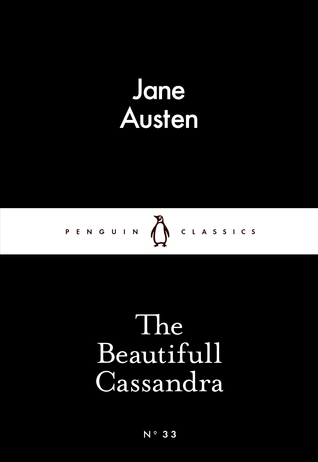
The Beautifull Cassandra


The Beautifull Cassandra


The little black book i decided to read was called The Beautifull Cassandra, by Jane Austen. The reason i chose this book was because in the past i have read many of her novels. She is one of my favourite authors. However after reading this book, my view on Jane Austin has changed. This book is very unlike other books of hers, the book is made up of little extracts of her early stories of when she was a child. I fond these stories to be fun and very entertaining. I found it a very light read, which is very funny. It was also very cool to read her earlier stuff and compare it to her later writing style. I also liked how Jane made themes like death and prison breaks add to the people's humour of the book. 

I really enjoyed the book, and really recommend to people who enjoy a fast, light and funny read.

The Great Gatsby pt4

As the novel progresses, Fitzgerald builds mystery around Gatsby's character; he keeps him in the dark, not only for us but for Nick too. In the first few chapter a lot is said and thought about Gatsby, but never by Gatsby himself. Nick and Gatsby eventually go to lunch together in the city and on the drive there, Gatsby tells him about his past and personal life but everything he says seems very improbable to Nick. That irritates Gatsby and makes him want to prove himself to the narrator. When they finally arrive, Gatsby introduces the narrator to a shady, New York city entrepreneur. Seeing the two men being friendly, Nick begins to suspect that Gatsby's wealth might be shadier than people think (organized crime?).

The Great Gatsby pt3

At this point in the novel, Tom brought Nick to this gas stop that lays in between West Egg and New York: an abandoned valley of ashes. There, they attend a party at Tom's mistress's house, which ends horribly wrong and violently too due to an exaggerated consumption of alcohol. Further on in the story, Nick receives an invitation to one of Gatsby's famously opulent parties and he attends. Carraway is surprised by the luxury of the party and by Gatsby's wealth. Even more surprising is that no one seems to know whom Gatsby is; everyone speculates about his wealth and his background, but nobody really knows the generous host. Everyone is a stranger to Gatsby. Finally, a man that seems familiar to Nick introduces himself as Jay Gatsby, and that is when they meet. The two of them, and Jordan, go on to talk very briefly. The party ends and Nick returns to his ordinary home and life, almost as though being at the party stopped time. Everyone let these inhibitions free during these parties, and forgot about the rest of the world for the night.

Charles Dickens: "The Great Winglebury Duel"

This novel first struck me because of its title; quite gripping and intriguing in a way. I have always loved books written by Charles Dickens so I took this as an opportunity to read more. It is book N°37 in the Penguin Little Black Classics.

The first part of the book, The Great Winglebury Duel, was the best story in my opinion, my favourite out of the two stories from the novel. I enjoyed it because it was funny and exciting, unlike many of Dickens' books at the time, which were more of mockery and slightly gloomy in a way. It was a story about mistaken identity and with humour within it, something I wasn't really expecting but this made it all the more enjoyable to read.

On the other hand The Steam Excursion; the second story, was rather boring and dull. About a lazy law student, Percy Noakes, who organises a steamship excursion. He's a very good man, and gets his way around by being so. But on this steamship excursion, where many guests are present, a storm rises causing the boat to tilt and many of the guests on board get seasickness. They blame it all on Percy; frustrated by his lack of success on this journey, he goes back to being an ordinary law student and continues his studies. In time he becomes a prosecuted counsel, feared by everyone. I didn't enjoy  this story that much because it is too predictable what happens in it.

I personally preferred many of Dickens' plays rather than these short stories, but it was something different to read therefore slightly entertaining.